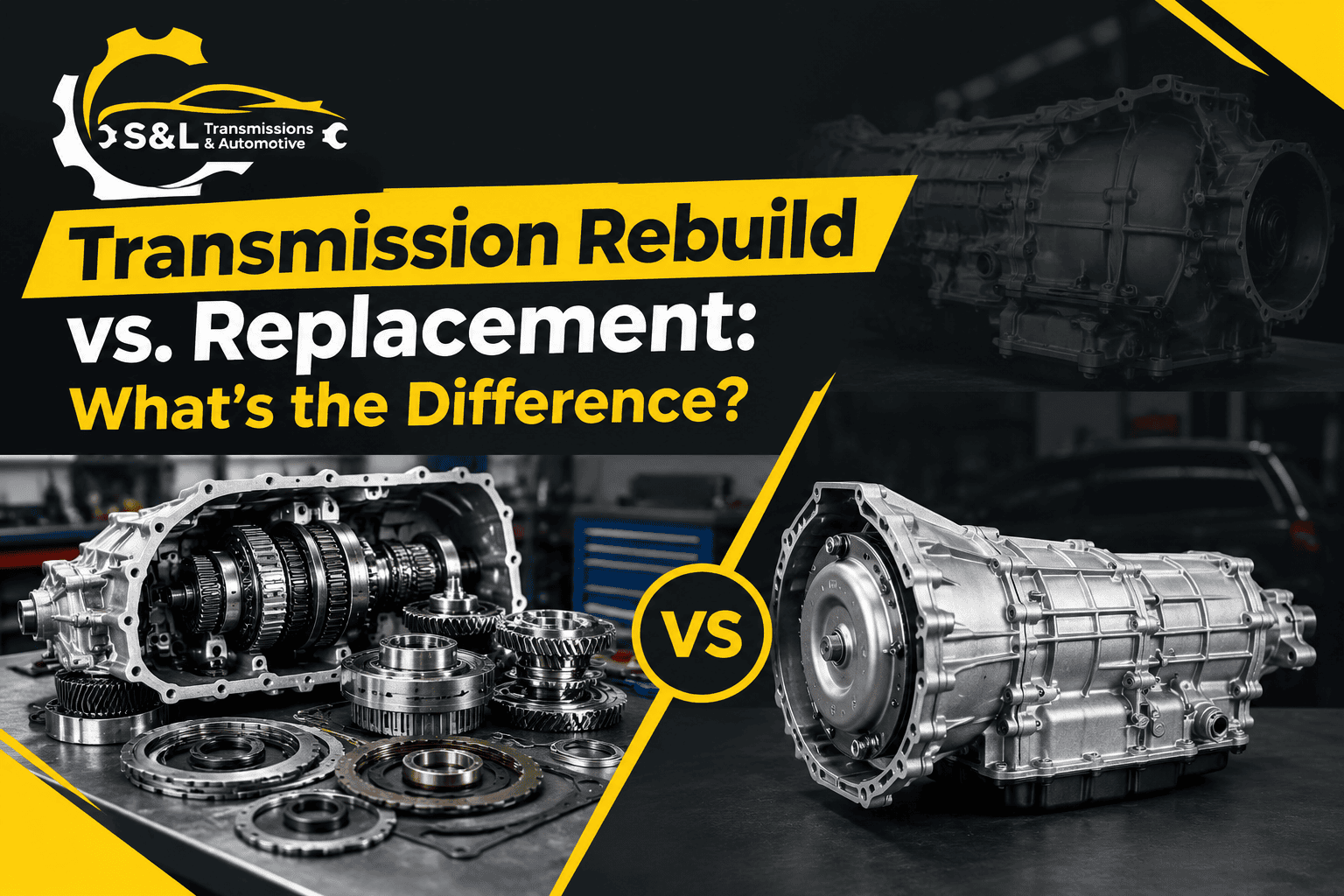
When your transmission starts acting up, slipping gears, delayed shifting, and strange noises occur, one of the first big decisions you’ll face is transmission rebuild vs. replacement. Both options get your vehicle back on the road, but they work very differently, and picking the wrong one for your situation can mean spending more money than necessary or ending up with a fix that doesn’t last.
What a Transmission Rebuild Actually Involves
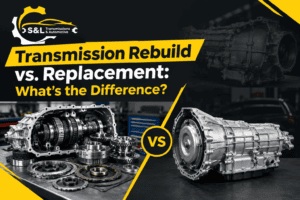
A rebuild means a full teardown and inspection of the transmission, checking every component individually – gears, bearings, clutch packs, and seals – so nothing worn gets missed and put back in. Only the parts that are actually damaged or worn out get replaced, while usable original components stay in place. The goal is to bring the unit back to original specifications rather than starting from scratch.
A proper rebuild also means checking beyond the obvious wear items. Technicians look at the torque converter, valve body, and case to confirm a rebuild is actually the right call and to help prevent the same issue from resurfacing down the road.
What Transmission Replacement Actually Involves
Replacement means installing a quality remanufactured or rebuilt unit matched to your vehicle’s exact specifications, rather than repairing the damaged one. Before recommending replacement, a good shop evaluates the extent of the damage and compares repair costs directly, since replacement isn’t always the better option even when a transmission is in rough shape.
When replacement does happen, it’s not just a swap. Fluid levels, electronic connections, mounts, sensors, and other supporting components all need to be checked and confirmed working before the vehicle leaves, so the new transmission actually performs the way it’s supposed to.
Comparing the Two
Cost is usually the first factor people weigh. In most cases, a rebuild costs significantly less than a brand-new or remanufactured transmission, without sacrificing reliability or performance, since you’re paying for specific worn parts rather than an entire unit.
Turnaround matters too. A rebuild is involved work that takes real time to do properly, since every component gets individually inspected rather than assumed to be fine. Replacement timelines depend on sourcing the correct remanufactured or rebuilt unit for your specific vehicle.
Longevity comes down to how the work is actually done. A rebuild using quality rebuild kits and OEM-quality components, not the cheapest parts available, holds up over the long run instead of failing again within a year. Replacement work backed by a warranty offers its own kind of confidence, so you’re not left wondering whether the job was done correctly.
Warranty coverage is worth asking about directly either way, since reputable shops back both rebuilds and replacements rather than leaving you on your own if something goes wrong afterward.
Signs That Point Toward a Rebuild
A rebuild tends to make sense when you’re noticing hard or delayed shifting, slipping between gears, grinding or whining noises, or burnt-smelling fluid, but the transmission hasn’t completely stopped shifting altogether. These symptoms usually don’t fix themselves, and driving on a failing transmission too long can turn a rebuildable unit into one that needs full replacement instead. Catching the damage early can mean the difference between a moderate repair bill and a much larger one.
Signs That Point Toward Replacement
Replacement becomes the more practical choice when a transmission won’t shift at all, when there’s severe grinding or metal-on-metal noises, when there’s complete loss of power in one or more gears, or when a transmission has already failed a previous rebuild attempt. These are usually signs that internal damage has gone beyond what a repair alone can address.
How a Proper Diagnosis Helps You Decide
The right call really depends on an honest evaluation first, not a default push toward whichever service costs more. A shop that explains rebuild vs. replace clearly and tells you upfront if a rebuild isn’t the right call or if replacement genuinely makes more sense is generally a good sign you’re getting a straight answer rather than an upsell.
It’s worth asking direct questions before committing: what exactly is damaged, what would a rebuild involve, what unit would a replacement use, and what warranty backs the work either way. Clear estimates before anything starts mean no surprise charges show up after the fact.
A Quick Note on Fluid Maintenance
Regardless of which path you end up taking, transmission fluid condition plays a role in how the repair holds up afterward. Old, contaminated fluid can shorten the life of even a freshly rebuilt or replaced transmission, so it’s worth addressing fluid quality alongside either repair rather than treating it as a separate, optional step.
Making the Right Choice for Your Vehicle
Neither rebuild nor replacement is automatically the better option. It comes down to the extent of the damage, how the vehicle’s been running, and what makes financial sense for your specific situation. Getting a proper diagnostic first is the best way to figure out whether to rebuild or replace transmission components rather than guessing based on symptoms alone.
At S&L Transmissions & Automotive in Sanford, NC, we bring more than 40 years of combined experience to every transmission rebuild and replacement, serving drivers throughout Sanford, Lee County, Apex, Fayetteville, and the greater Triangle region, backed by warranties on all major engine and transmission work.
Not sure which option makes sense for your vehicle? Get an appointment and have your transmission properly diagnosed before deciding between a rebuild and a full replacement.